


7 Best Beginner Dance Styles for Young Kids

A child does not need to be naturally coordinated, outgoing, or endlessly energetic to enjoy a first dance class. The best beginner dance styles create a gentle starting point: one where children can move, listen, imagine, and gradually feel proud of what their bodies can do. For parents, the right choice is less about finding the “perfect” style and more about finding a class that fits a child’s age, personality, and stage of development.
For toddlers and young children, a positive first experience matters far more than fast progress. A well-taught class can build balance, flexibility, rhythm, focus, and confidence while still feeling like a joyful part of the week. Here are seven beginner-friendly options and how to decide which one may suit your child.
7 Best Beginner Dance Styles for Young Kids
1. Ballet
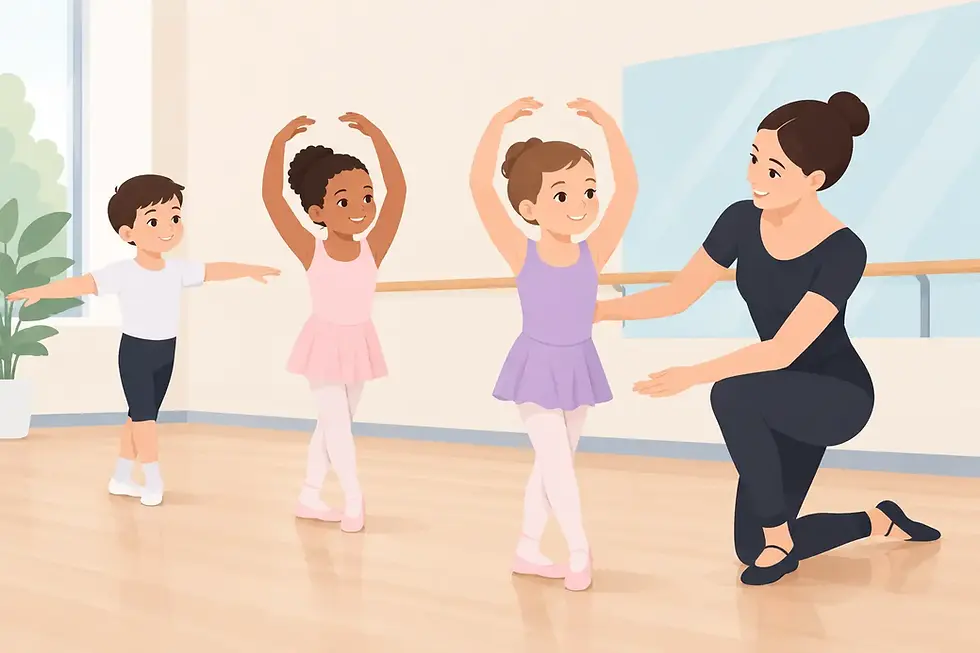
Ballet is often one of the strongest first dance foundations for young children. Its structured movements help children develop posture, balance, coordination, musical awareness, and an understanding of how to follow directions. Even simple exercises such as pointing toes, making shapes with the arms, or moving across the room to music give little dancers useful body awareness.
For toddlers and preschoolers, ballet should not look like a formal training session for older students. The best early ballet classes use stories, songs, imagination, and age-appropriate movement to introduce basic skills. Children may pretend to be butterflies, tiptoe like kittens, or practice traveling movements while learning to take turns and listen to the teacher.
Ballet can be especially helpful for children who benefit from routine and gentle structure. It also creates a valuable technical base if a child later wants to explore jazz, contemporary dance, or other styles. That said, a very lively child may need a class that balances ballet technique with plenty of creative movement rather than long periods of stillness.
2. Creative Movement
Creative movement is an excellent choice for the youngest dancers, particularly children around ages two and a half to four. Rather than focusing on named steps, these classes introduce movement through play. Children learn to move high and low, fast and slow, softly and strongly, often using music, props, and imaginative themes.
This style supports physical development without asking children to perform skills before they are ready. It encourages them to notice space, explore different ways of moving, and express ideas through their bodies. For a child who is shy, creative movement can provide a low-pressure path into group activities. For a child with lots of energy, it offers a positive and organized outlet.
Creative movement is sometimes included within an early childhood ballet program rather than offered as a separate class. That combination can be ideal because it gives children both freedom to explore and an introduction to foundational dance habits.
3. Modern Jazz
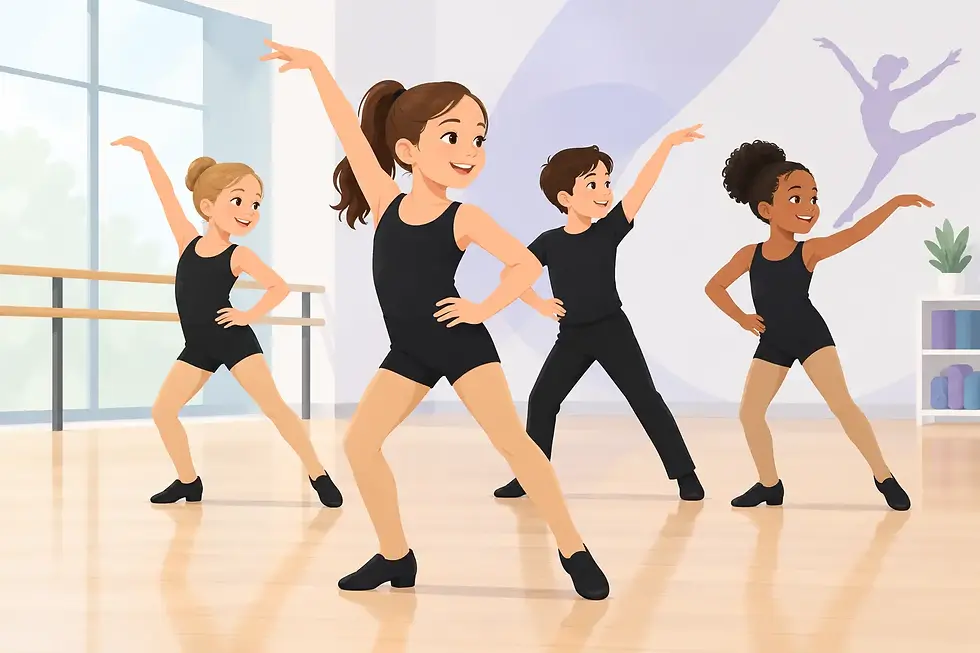
Modern jazz is energetic, expressive, and often a favorite for children who enjoy upbeat music and bigger movements. Beginner jazz classes may include jumps, turns, traveling steps, stretches, and simple combinations. As children grow, jazz helps them develop strength, flexibility, rhythm, and performance confidence.
This style tends to suit children who enjoy moving with boldness and personality. It can be a wonderful next step for a child who has already had some early ballet or creative movement experience, although well-designed beginner jazz classes can also welcome newcomers.
The trade-off is that jazz often moves at a quicker pace than toddler ballet. Very young children still need a teacher who breaks skills into small, achievable steps and keeps expectations realistic. Look for an instructor who values correct fundamentals and joyful participation, not just a polished routine.
4. Tap Dance
Tap dance turns rhythm into something children can hear and feel. With tap shoes, each step creates sound, helping young dancers understand beats, timing, and patterns in a very direct way. Children often enjoy the immediate reward of making music with their feet.
Tap can strengthen coordination because dancers need to listen carefully while controlling their lower-body movements. It is a good option for children who respond strongly to music or who enjoy games involving clapping, counting, and repeating rhythms. It can also appeal to children who are less interested in flowing arm movements but love making noise and learning playful footwork.
For very young beginners, tap works best when the class is designed around short activities and simple rhythms. The shoes and sounds can be exciting, but the teacher should still make space for basic movement skills, stretching, and age-appropriate attention spans.
5. Hip-Hop
Hip-hop classes offer a lively, grounded style of movement that many children find immediately exciting. Beginner classes often teach basic grooves, isolations, footwork, and simple combinations set to age-appropriate music. The atmosphere can feel relaxed and expressive while still teaching discipline, timing, and coordination.
Hip-hop may suit children who are drawn to current music, enjoy strong movements, or feel hesitant about more traditional dance settings. It can help a child discover that dance is not about looking a certain way. It is about learning control, rhythm, and confidence in their own body.
For preschool-aged children, however, class quality matters greatly. The movements, music, and teaching approach should be carefully selected for young learners. A child who is just beginning may also benefit from ballet or creative movement first, as those classes often build the balance and listening skills that make later hip-hop training easier.
6. Contemporary Dance
Contemporary dance combines expressive movement with elements that may be drawn from ballet, modern dance, and floor work. It gives children room to communicate feelings and ideas through movement rather than simply copying a set pose. Older beginners often enjoy its freedom and emotional range.
For early elementary-age children, a beginner contemporary class can build flexibility, control, musicality, and creativity. It may be a good match for a child who enjoys telling stories, responds deeply to music, or wants a style that feels less formal than classical ballet.
Because contemporary technique often relies on body awareness and control, it is usually more suitable for children who have developed some foundational skills. It is not necessarily the easiest first class for a toddler, but it can be a rewarding next stage after ballet, creative movement, or jazz.
7. Acro Dance
Acro dance blends dance technique with controlled skills such as rolls, balances, bridges, and beginner-level flexibility work. It can be highly motivating for children who love to tumble, climb, and test what their bodies can do. When taught carefully, it supports strength, spatial awareness, and confidence.
It is worth remembering that acro is not simply gymnastics with music. Good acro dance training emphasizes proper progressions, warm-ups, safe technique, and individual readiness. A child should never feel pressured to attempt a skill before they have the strength and control for it.
Acro can be a good fit for energetic school-age children, especially when paired with a strong dance foundation. For younger children, seek a class where instructors prioritize basic movement patterns and celebrate steady progress rather than dramatic tricks.
How to Choose the Right First Dance Class
Age is a useful starting point. Toddlers generally need imaginative play, short activities, repetition, and caring guidance. Preschoolers can begin following simple class routines and learning foundational skills, while early elementary-age children may be ready for longer combinations and more style-specific technique.
Your child’s personality also matters, but do not feel limited by it. A quiet child may flourish in a gentle ballet class and become more confident over time. A high-energy child may love jazz or hip-hop, yet still gain valuable focus from ballet. The goal is not to label a child. It is to give them an environment where they feel safe enough to try.
Before enrolling, ask what a typical class looks like. A thoughtful beginner program should include a warm-up, age-appropriate skill building, musical movement, and a calm, positive transition at the end. Small classes can make a meaningful difference, especially for young children who need encouragement and individual attention.
A trial class is often the clearest way to tell whether the fit is right. Watch for a teacher who speaks warmly, gives simple instructions, and knows how to redirect children without making them feel embarrassed. At C Dance Academy, early childhood dance learning is designed around those small but important moments of support, structure, and discovery.
Let Joy Lead the First Step
The best first dance style is the one that helps your child walk out of class feeling capable, seen, and eager to return. Whether that begins with tiny ballet steps, tapping feet, or expressive jazz movement, early dance can become a place where confidence grows one class at a time.

Comments