


How to Teach Rhythm Through Dance to Kids

A child does not need to know what a beat is to feel one. You can see it when a toddler claps after a song stops, bounces to a favorite tune, or marches proudly across the room. Learning how to teach rhythm through dance begins by noticing that natural response and giving it a gentle structure.
For young children, rhythm is not about counting complicated musical patterns. It is about listening, moving, stopping, repeating, and discovering that their bodies can match what they hear. When taught with patience and imagination, rhythmic movement supports coordination, musicality, focus, confidence, and a lifelong enjoyment of dance.
Start With the Beat, Not the Steps
Parents sometimes picture rhythm lessons as children standing still and counting, “one, two, three, four.” Counting does have a place, especially as children grow older, but it is rarely the best first step for toddlers and preschoolers. At this age, children learn through their senses and through play.
Begin with a clear, steady beat. Choose music with a pace that is easy to hear, then invite your child to walk, march, clap, or tap along. A simple instruction such as, “Can your feet step when you hear the drum?” gives a young dancer a concrete goal without making the activity feel like a test.
The goal is consistency, not perfection. A child may move ahead of the beat, pause for a moment, or create their own pattern. That is normal. Gentle repetition helps them connect sound and movement over time.
Use familiar movements first
Young children can focus on rhythm more easily when the movement itself feels comfortable. Walking, stomping, clapping, patting knees, nodding, and swaying are excellent starting points. Once a child can keep a simple pulse with these actions, you can add dance-based movements such as tiptoes, skips, gallops, or small jumps.
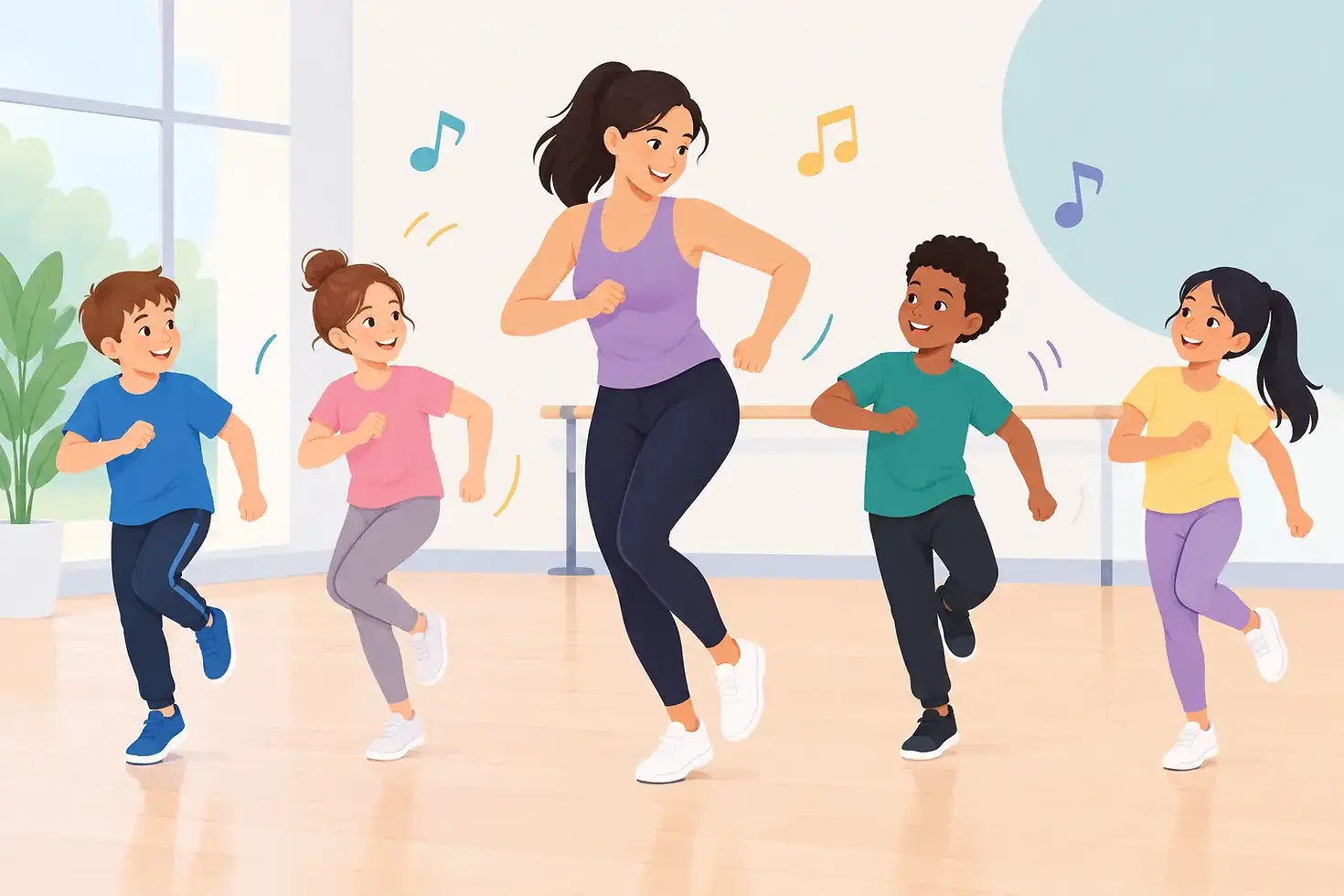
For example, try a marching game. March for eight counts, freeze when the music stops, then begin again when it returns. The freeze is just as valuable as the marching because it teaches children to listen closely and control their bodies.
How to Teach Rhythm Through Dance as Play
The most effective rhythm activities for young dancers have a clear purpose but still feel joyful. A child is much more likely to repeat a skill when it is part of an imaginative game.
Pretend play works especially well for children ages two to five. Ask them to stomp like elephants to a slow beat, flutter like butterflies to a lighter rhythm, or move like rain falling from the sky. Change the music and ask what kind of movement the new sound suggests. These activities develop listening skills while encouraging self-expression.
Props can also make the beat easier to see and feel. Scarves are useful for showing long, flowing movements, while rhythm sticks or hand drums can help children hear a stronger pulse. Use props with clear boundaries and close supervision, particularly with very young children. The prop should support the lesson, not become the focus of it.
A simple call-and-response game is another valuable tool. Clap a short pattern, such as clap-clap-pause-clap, and invite your child to copy it. Start with two or three sounds only. As their confidence grows, add a stomp, a pat, or a turn. This teaches children that rhythm can be repeated, remembered, and shared.
Choose Music That Matches Their Development
Music selection can make a big difference. A fast, busy song may be exciting, but it can be difficult for beginners to follow. For toddlers and new dancers, choose music with a strong, steady beat and a moderate tempo. Songs with clear percussion, simple melodies, or predictable phrases are often easier to use than music with frequent changes.
It also helps to vary the tempo once children are comfortable. Move slowly like you are walking through thick mud, then move more quickly like you are chasing bubbles. Ask children to notice what changed. They do not need formal music vocabulary right away. Phrases such as “slow music,” “quick music,” “big beat,” and “quiet sound” are meaningful and accessible.
For older preschoolers and early elementary-age children, introduce basic counting naturally. You might say, “Let’s make four giant steps,” or, “Can we clap eight times before the music changes?” Counting gives structure, but the movement should remain the main experience.
Build Rhythm Into a Simple Class Routine
Children learn best when they know what to expect. A predictable dance class routine gives rhythm practice a familiar home each week. It also helps children feel secure enough to try new skills.
A well-paced early childhood class might begin with a welcome song, followed by warm-up movements that use a steady beat. Children can then practice traveling steps across the room, explore a rhythm game, and finish with a calming stretch or goodbye song. The activities may change, but the overall structure stays recognizable.
This repetition is not boring for young children. It helps learning settle in. When a child knows that marching comes after the welcome song, they can direct more attention toward matching the beat instead of figuring out what happens next.
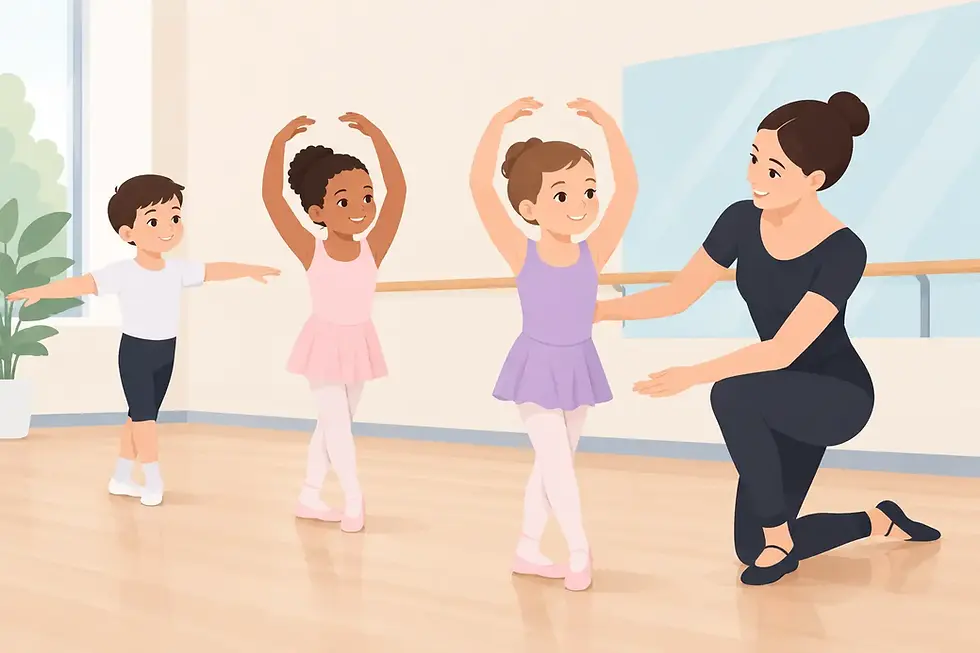
Small class sizes are especially helpful during these early stages. An experienced teacher can observe whether a child needs a slower demonstration, a visual cue, or an extra moment to process an instruction. Some children respond best by watching first; others need to move right away. Both approaches are valid.
Praise Effort Without Creating Pressure
Rhythm develops at different speeds. One child may naturally hear the beat while another needs many opportunities to practice before the connection becomes clear. Avoid correcting every missed count. Too much correction can make a child self-conscious and less willing to move freely.
Instead, use specific, encouraging feedback. Say, “I saw you stop exactly when the music stopped,” or, “Your claps matched the drum.” This tells children what they did well and helps them understand the skill they are building.
If a child is struggling, simplify the activity. Return to walking or clapping rather than asking them to manage several new steps at once. Rhythm is easier to learn when the body is not also trying to remember a complicated sequence.
It is also helpful to remember that a child who appears distracted may still be listening. Some children need to observe a few rounds before joining in. Give them a welcoming invitation rather than pressure: “When you are ready, you can march with us.”
Practice at Home in Small Moments
You do not need a dance studio or a long practice session to support rhythm at home. A few playful minutes can be enough. Clap while putting toys away, tap a beat while waiting for dinner, or create a stop-and-go game during a favorite song.
Try making everyday routines musical. Count steps to the bathroom, march while carrying laundry, or tap a gentle beat on the table as you say a nursery rhyme. Keep the experience light. If your child loses interest, stop and return to it another day.
For families in Bandar Utama, Damansara, and Petaling Jaya, a beginner-friendly dance class can add the benefit of a dedicated space, age-appropriate equipment, and guidance from teachers who understand early childhood development. At C Dance Academy, children are introduced to foundational movement in a caring environment where progress is encouraged one small step at a time.
When to Add More Dance Technique
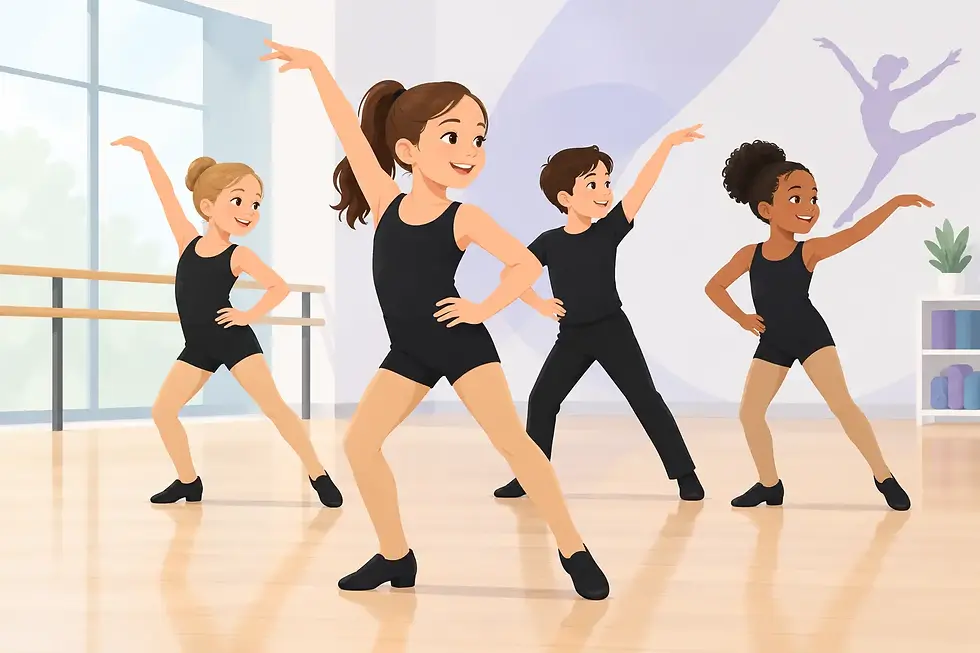
As children become more comfortable finding the beat, rhythm can be paired with basic dance technique. A child might point and flex their feet for four counts, perform gentle pliés to slow music, or practice a short sequence of step-together-step movements. These exercises build body awareness while showing children that dance movements have timing and shape.
The right level depends on age, attention span, and experience. A toddler may thrive with a few minutes of marching and freezing, while a six-year-old may enjoy learning a short combination with counts. Neither approach is better. The best lesson is the one that gives the child enough challenge to feel proud, without taking away the pleasure of moving.
Rhythm grows through repeated, happy experiences with music. When children are invited to listen with their ears, respond with their bodies, and celebrate each small success, they begin to understand something bigger than counting: movement can tell a story, connect people, and feel wonderfully alive.
This is a great explanation of how children can develop rhythm naturally through movement and play. I especially liked the emphasis on simple activities such as marching, clapping, freezing, and call-and-response before introducing more structured counting. Keeping rhythm practice enjoyable and age-appropriate can make a big difference in building timing and coordination. For parents and teachers looking for an easy way to practice and understand tempo alongside these activities, a BPM tapper can also be a useful tool: https://bpmtapper.fun/