


Do Toddlers Need Ballet Shoes for Class?

Your child has finally chosen a leotard, or perhaps they are simply excited to twirl in a favorite T-shirt. Then comes the practical parent question: do toddlers need ballet shoes for their very first class? Usually, the answer is yes, but not because they need to look like a miniature professional dancer. The right shoes support safe movement, help children feel part of the class, and give little feet the grip they need as they learn.
For a toddler beginning ballet, the goal is comfort and confidence, not perfect technique. A well-run early childhood class uses imaginative movement, songs, simple ballet foundations, and plenty of encouragement. Shoes are one small part of making that experience feel secure and special.
Do Toddlers Need Ballet Shoes From the First Lesson?
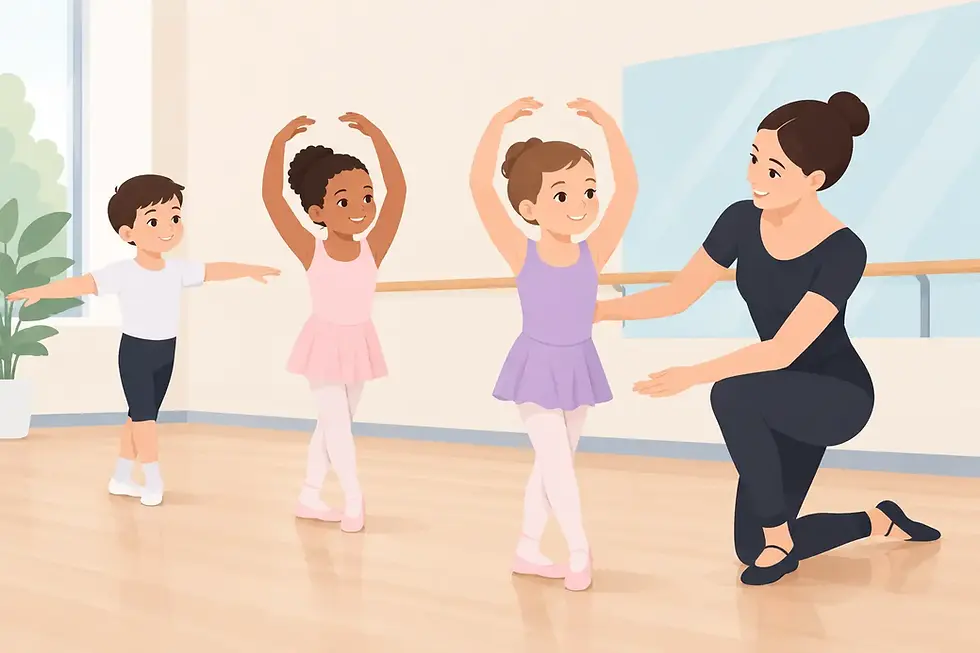
Many beginner ballet programs ask toddlers to wear soft ballet slippers. These are the flexible, lightweight shoes commonly made from leather or canvas, with a thin sole designed for dance floors. They are very different from hard pointe shoes, which are only used years later by appropriately trained older dancers.
That said, a first trial class may be different. Some studios allow children to attend in bare feet or clean, non-slip socks while parents confirm that the class is a good fit. This can make the first visit feel easier, especially when a child is still deciding whether they enjoy being in a new group setting.
Once your child enrolls, ballet shoes are generally a worthwhile investment. They create a simple routine: change into dancewear, put on ballet shoes, and get ready to listen and move. For many toddlers, that ritual helps them shift from playtime into class time with a sense of purpose.
Always follow your studio's dress code first. Requirements can vary based on the floor surface, the class format, and the age of the children. An instructor who works with young dancers can recommend the right style and fit for your child's program.
Why Soft Ballet Shoes Help Young Dancers
Toddlers are still developing balance, body awareness, and coordination. Soft ballet shoes let them feel the floor beneath their feet while giving them more protection than bare feet. This matters during activities such as walking on tiptoes, making gentle jumps, pointing toes, and practicing simple positions.
The thin, flexible sole allows the foot to move naturally. Unlike sneakers, which are built for impact and outdoor play, ballet slippers do not have thick, stiff soles that can make it harder for a child to articulate the foot or keep their movements light. They also help reduce the chance of slipping compared with regular socks on a smooth studio floor.
There is an emotional benefit, too. Toddlers often learn through imitation. When they see their teacher and classmates preparing in their ballet shoes, they feel included in the group. Wearing the right attire can encourage focus without placing adult expectations on a very young child.
Of course, shoes do not create confidence by themselves. Confidence grows when a child is welcomed warmly, given clear instructions, and celebrated for trying. At C Dance Academy, early ballet teaching is designed around those small, meaningful wins: joining the circle, following a rhythm, balancing for a moment longer, or proudly showing a new movement to a parent.
What Kind of Ballet Shoes Should a Toddler Wear?
For most children ages 2.5 to 5, soft ballet slippers are the appropriate choice. Look for a pair that is lightweight, close-fitting, and easy for your child to wear. Pink is traditional for many ballet classes, though the preferred color may depend on the studio's uniform policy.
Leather or canvas?
Leather slippers are durable and often provide a little more structure, which can be helpful for active toddlers. They may also offer slightly better traction. Canvas slippers are soft, breathable, and often easier to wash, but they can wear through more quickly if your child uses them frequently.
Either material can work well. The best choice depends on your studio's recommendation, your child's comfort, and how often they attend class. For a child starting one weekly beginner class, there is no need to overthink the decision or buy an expensive pair.
Full sole or split sole?
A full-sole slipper has one continuous piece of suede or leather across the bottom. This style is often a practical option for toddlers because it provides a clear sense of the whole foot contacting the floor.
Split-sole shoes have separate pads under the heel and ball of the foot. They are popular with older dancers because they show the arch of the foot more clearly. Toddlers do not need that visual effect. If your instructor does not specify a style, a simple full-sole slipper is often an easy, age-appropriate choice.
Elastic and fastening details
Choose shoes with secure elastics that keep the slipper from slipping off during skips, jumps, and imaginative games. Some toddler styles have an elastic strap already sewn in, while others use a crossover elastic. This is convenient for parents and more comfortable for children who are still learning to dress independently.
Avoid ribbons for very young beginners unless the studio specifically requests them. They can come untied, trail on the floor, and become a distraction. A toddler should be able to move freely without needing to stop halfway through class for shoe adjustments.
How Should Toddler Ballet Shoes Fit?
The best fit is snug but never tight. Ballet slippers should sit smoothly around the foot without painful pinching at the toes, heel, or sides. There should be very little extra room at the front, but your child should still be able to wiggle their toes comfortably.
Do not size up dramatically to make the shoes last longer. Oversized ballet shoes can twist, bunch under the toes, or slide around during movement. That can affect balance and make a child feel less secure. Since toddler feet grow quickly, it is better to check the fit regularly and replace the shoes when they become noticeably tight or worn.
Have your child try both shoes while standing, walking, and rising gently onto their toes. Watch for a heel that slips off, fabric that bunches, or an elastic that digs into the skin. If possible, let them take a few small jumps. Their reaction matters: a child who keeps pulling at a shoe or says it hurts is telling you the fit needs attention.
What Should Toddlers Wear if They Do Not Have Ballet Shoes Yet?
If your child's class is tomorrow and you have not bought slippers yet, do not let that stop you from asking about a trial lesson. Many studios understand that families want to see whether a toddler feels comfortable before purchasing dancewear.
Clean bare feet may be acceptable in some classes, especially for a one-time trial. Bare feet allow young children to grip the floor and feel their movements, although they provide less protection. Non-slip socks can sometimes work as a temporary option, but regular socks can be slippery and are usually not ideal for ballet movement.
Avoid sandals, dress shoes, slippers worn around the house, and sneakers unless the teacher specifically says otherwise. These can limit movement, catch on the floor, or make it difficult to point and stretch the foot. A safe studio environment begins with footwear that matches the activity.
Making Ballet Shoes Part of a Positive Routine
The first pair of ballet shoes can feel surprisingly meaningful to a young child. Keep the experience light. Let them practice putting the shoes on at home, walking carefully across a clear space, and placing them in a small dance bag after class. This supports independence while teaching them to care for their belongings.
It also helps to use simple language. Rather than asking a toddler to make a perfect point, you might say, “Can you make your toes long?” Instead of worrying about whether the shoes look pristine, focus on whether your child can move, listen, and enjoy being part of the class.
A pair of soft ballet shoes will not determine whether your child loves dance. A patient teacher, an age-appropriate class, and the freedom to learn through joyful movement matter much more. When the shoes fit well and the room feels welcoming, your toddler has one less thing to think about and more space to discover what their body can do.
Comments