


Private or Group Kids Dance Lessons for Your Child

A child who happily twirls around the living room may still feel shy when stepping into a studio for the first time. That is why choosing between private or group kids dance lessons is not simply about class size. It is about finding the setting where your child can feel secure, engaged, and excited to learn.
Both options can help children build coordination, balance, musical awareness, confidence, and discipline. The right choice depends on your child’s age, personality, current experience, and what you hope dance will bring to their week. For many young beginners, a thoughtfully structured small group class offers the ideal combination of individual attention and joyful connection with others. In other situations, private instruction can provide a valuable, focused start.
What group dance lessons give young children
For toddlers, preschoolers, and early elementary-age children, dance is often about much more than learning steps. It is a place to practice listening, taking turns, moving with purpose, and participating in a group. These are meaningful skills for children who are still learning how to express themselves beyond home or school.
In a well-run group class, children learn by watching their teacher and one another. A child may be hesitant to try a new skip or stretch alone, then decide to join in after seeing a classmate do it with a smile. That gentle peer encouragement can be especially powerful for young dancers.
Group lessons also introduce the rhythm of a class. Children learn to arrive, settle into the space, follow simple directions, wait for a turn, and celebrate shared progress. These routines support independence and self-control without taking away the fun. When lessons are designed for young children, imagination, music, movement games, and age-appropriate ballet foundations keep the experience playful and purposeful.
Small class sizes matter here. A group should never feel like a child is lost in the crowd. Qualified instructors can still notice posture, offer encouragement, help a nervous beginner, and adapt guidance to each child’s stage of development.
Group classes can build belonging
Some children come alive around peers. They enjoy greeting familiar faces each week, practicing a routine together, and feeling part of a class performance. That sense of belonging can turn dance into a dependable, happy part of childhood.
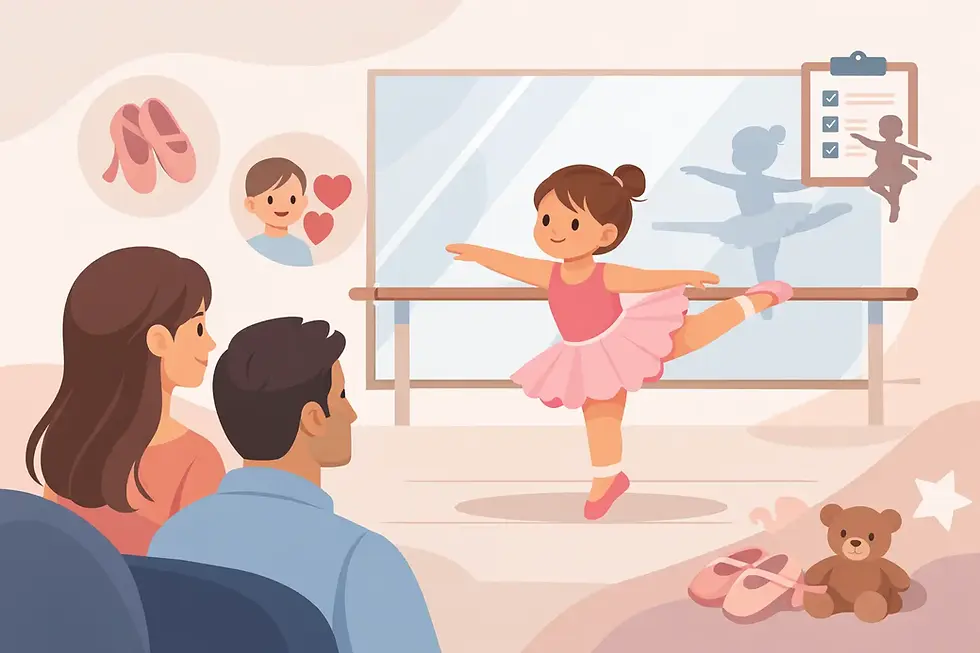
Performances, when introduced with care, offer another benefit. A child does not have to carry the full pressure alone. They can share the moment with their classmates, teachers, and family. For many beginners, this is a comfortable way to build confidence in front of an audience.
When private dance lessons may be the better fit
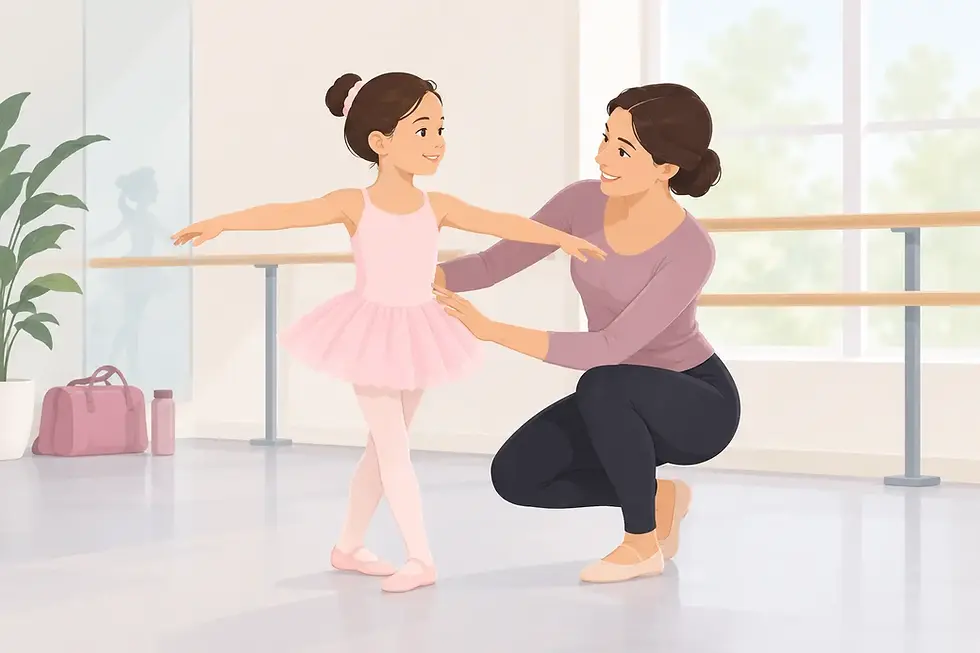
Private dance lessons offer one-on-one instruction tailored to a child’s specific needs. This can be a good option for an older child with a clear technical goal, a dancer preparing for an audition, or a child who needs extra help with a particular skill.
A private setting may also help a child who finds groups overwhelming at first. With a patient instructor, they can become familiar with the studio, learn basic movement patterns, and develop trust at a slower pace. This is sometimes useful after a long break from activities or when a child needs more individualized support.
However, private lessons are not automatically better because they provide more attention. Very young children often benefit from seeing and playing alongside other children. One-on-one instruction can feel intense for a toddler who is still building focus and confidence. It also does not naturally provide the social learning that comes from participating in a group.
Private instruction tends to work best when there is a clear reason for it. If the goal is simply to introduce a young child to the joy of movement, a nurturing beginner group may be the more natural starting point.
Private or group kids dance lessons: key factors to consider
Rather than asking which format is best in general, ask which environment will help your child take the next small step forward. A few questions can make the decision clearer.
Consider your child’s age first. Toddlers and preschoolers usually need lessons that respect their shorter attention spans and growing social skills. A class built around creative movement, basic ballet positions, simple rhythm, and encouraging routines can provide structure without expecting too much too soon.
Next, think about personality, but avoid labeling your child too quickly. A quiet child may thrive in a small group once they feel safe. An energetic child may enjoy having classmates to move with and learn from. On the other hand, a child who becomes distressed in busy settings may benefit from a gradual introduction or a private session before joining a class.
Your family’s goals are equally important. If you want your child to gain confidence, make friends, and enjoy a weekly creative outlet, group lessons are often a strong choice. If you are looking for personalized coaching, flexible pacing, or focused preparation for a specific opportunity, private lessons may be worthwhile.
Cost and consistency are practical considerations, too. Group programs are generally more accessible and create a regular social routine. Private lessons offer personalization but may require a larger investment and more active planning to maintain momentum. Neither choice needs to be permanent. Children grow quickly, and the right format can change with them.
Why the teacher and class design matter most
The quality of instruction matters more than the label on the class. A warm, experienced children’s dance teacher understands that beginners do not need to be corrected into perfection. They need clear expectations, patient guidance, positive feedback, and opportunities to try again.
For early childhood ballet, instruction should be developmentally appropriate. Children can learn beautiful foundations through simple exercises that support posture, flexibility, balance, coordination, and musicality. They should not be pushed into advanced movements before their bodies or attention are ready.
A supportive studio also communicates with parents. You should feel comfortable asking what your child will learn, how instructors handle first-day nerves, and what level of participation is expected. A child may spend the first lesson observing, holding a teacher’s hand, or joining only part of an activity. This can be a perfectly normal beginning, not a sign that dance is not for them.
At C Dance Academy, classes are designed to meet young children where they are, with age-appropriate instruction and a welcoming environment for families. A trial class can be especially helpful because it lets your child experience the teacher, music, studio routine, and group atmosphere before you make a longer commitment.
How to help your child feel ready for the first class
Keep the first dance lesson simple and low-pressure. Tell your child they will get to listen to music, move their body, and meet a teacher who will show them what to do. Avoid promising that they must perform perfectly or make a friend immediately.
Arrive a little early so there is time to settle in. Comfortable dancewear, a water bottle, and a calm goodbye can make a real difference. If your child is nervous, let the instructor know. Experienced teachers are used to helping little ones transition into a new space.
After class, ask gentle questions such as, “What music did you like?” or “What was fun?” A child may not be ready to explain much at first. Their body language often tells you more: Did they relax after a few minutes? Did they copy a movement? Did they talk about the class later at home?
The best dance lesson is not the one that looks most impressive on day one. It is the one that gives your child a safe place to grow, move, and return to with growing confidence.

Comments