


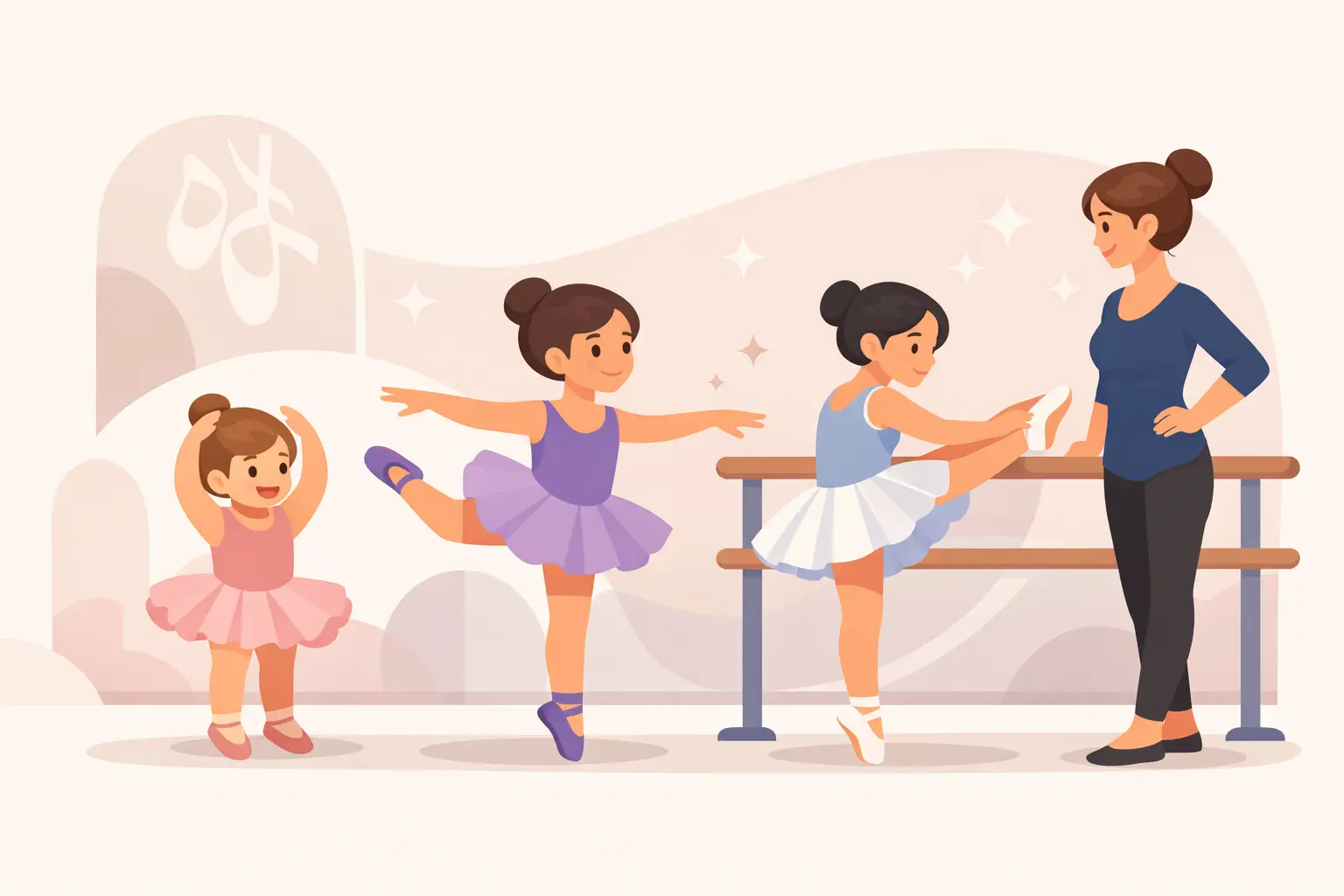
Kids Ballet Class Age Guide for Parents

If you have ever watched your child twirl across the living room and wondered whether it is time for ballet, you are not alone. A good kids ballet class age guide can help you look past the tutu stage and choose a class that truly fits your child’s development, attention span, and confidence level.
Parents often ask one simple question: what is the best age to start ballet? The honest answer is that it depends on the child and on the class. A well-designed program for a 2.5-year-old should look very different from one for a 6-year-old. Age matters, but readiness matters just as much.
Why age matters in a kids ballet class age guide
Ballet builds coordination, musicality, posture, balance, and discipline, but children develop those skills in stages. The youngest dancers learn best through imagination, repetition, and movement games. Older children can begin understanding more structure, technique, and classroom expectations.
That is why age-appropriate teaching is so important. When a class matches a child’s stage of development, they are more likely to feel successful, stay engaged, and enjoy coming back each week. When a class is too advanced, children can become frustrated or discouraged. When it is too simple, they may lose interest.
A strong early childhood ballet program does not rush children into formal technique. It gives them the right foundation first - listening skills, body awareness, rhythm, and confidence in a group setting.
Ages 2.5 to 3.5 - a gentle introduction
For toddlers and young preschoolers, ballet class is usually an introduction to movement rather than strict ballet training. This is the age when children are still learning how to separate from a parent, follow simple directions, wait for a turn, and participate in a group.
A quality class for this age should feel warm, structured, and playful. Teachers may use music, storytelling, props, and simple movement patterns to introduce concepts like tiptoes, jumping, stretching, and balance. Children are not expected to master positions with precision. The goal is comfort, joy, and early coordination.
At this stage, shorter attention spans are completely normal. Some children join right in. Others need a few classes before they feel secure. That does not mean they are not ready. It often means they need patient instruction and a predictable routine.
For many families, this is a wonderful age to begin because children are still very open to movement and imaginative learning. The trade-off is that progress may look subtle at first. Parents may not see polished dance steps right away, but they are seeing the beginnings of classroom confidence, body control, and musical response.
Ages 4 to 5 - the sweet spot for beginner ballet
For many children, ages 4 to 5 are an ideal time to start beginner ballet. At this stage, preschoolers are usually more comfortable in a class environment and better able to follow multi-step instructions. They can start learning simple ballet vocabulary and movement sequences while still benefiting from creative, playful teaching.
This is often the age when parents begin to notice clear developmental gains. Children may stand taller, listen more carefully, remember routines, and feel proud of learning something new each week. Ballet can also support confidence in children who are shy, energetic, or still developing coordination.
Classes for this age should still be child-centered. Young dancers need encouragement, variety, and movement that suits their bodies. They are not miniature teens, and they should not be taught that way. A healthy beginner program builds technique slowly while protecting the child’s enthusiasm.
If your child is 4 or 5 and curious about dance, this is usually a very natural time to begin.
Ages 6 to 8 - more structure, still beginner-friendly
Children who start ballet at 6, 7, or 8 are absolutely not late. In fact, many are better prepared for a more structured lesson. They can usually focus longer, retain corrections more easily, and understand how to repeat exercises with intention.
At this age, beginner ballet can include more formal class elements such as basic positions, barre preparation, across-the-floor patterns, and simple performance skills. Children are often excited by progress and can take pride in learning proper technique.
Some parents worry that if their child did not start at 3, they have missed their chance. That is rarely true for recreational and foundational training. A child who begins at 7 with focus and interest may do very well, especially in a class designed for true beginners rather than students with years of prior experience.
This is where class placement matters. A 7-year-old beginner should not be dropped into a class with experienced dancers just because of age. The best fit balances maturity with skill level.
What if your child starts later?
Children can enjoy ballet at many ages, including later elementary years and beyond. Starting later may mean they move into beginner technique classes rather than early childhood ballet, but there is still plenty to gain. Ballet supports strength, flexibility, discipline, musicality, and grace at any starting point.
What changes is the teaching approach. Older beginners usually need instruction that respects their maturity while keeping expectations realistic. They may progress quickly in some areas and need more patience in others, especially if they are building flexibility and coordination from scratch.
The key point for parents is this: the best age to start is not a fixed number. It is the age when your child is emotionally ready, physically able to participate safely, and placed in a class that meets them where they are.
Signs your child is ready for ballet
A kids ballet class age guide is useful, but age alone never tells the whole story. Readiness often shows up in small ways.
Your child may be ready if they enjoy moving to music, can follow simple instructions, separate from you with reasonable comfort, and show curiosity about joining a class. They do not need perfect balance or exceptional coordination. Beginners are there to learn.
It also helps if your child can manage a basic class routine, such as lining up, taking turns, and listening to a teacher for short periods. That said, young children are still learning all of these things. A nurturing studio expects that.
If your child is very hesitant, highly sensitive in new environments, or not yet comfortable in group activities, a trial class can be especially helpful. It gives you a clearer picture than age charts alone.
What parents should look for in the right class
Not all children’s ballet classes are built the same. For young beginners, the teacher matters just as much as the syllabus.
Look for instructors who understand child development, not just dance technique. Teaching very young children requires patience, warmth, consistency, and the ability to turn movement into meaningful learning. Small class sizes can also make a real difference, especially for toddlers and preschoolers who benefit from gentle redirection and individual attention.
It is also worth asking how the curriculum changes by age. A thoughtful studio will have clear differences between toddler ballet, preschool ballet, and beginner classes for older children. That is often a sign that the program is designed with children in mind rather than simply scaled down from older training.
For families in Petaling Jaya or Bandar Utama, this is one reason many parents appreciate studios such as C Dance Academy, where early childhood ballet is structured specifically for young learners rather than treated as an afterthought.
Common worries parents have
One of the most common concerns is, “My child is active and does not stand still. Can they still do ballet?” Often, yes. A well-run beginner class does not expect young children to be still for the entire lesson. It channels their energy into rhythm, movement, and focus over time.
Another worry is whether ballet is too strict for little ones. Good early ballet should be structured, but not harsh. Children thrive when expectations are clear and the environment is kind. Discipline in this context means learning to listen, try again, and grow with encouragement.
Parents also ask whether ballet is only for children who already seem graceful. It is not. Many children come to ballet precisely because they need support with coordination, balance, or confidence. Those skills are developed in class.
Choosing the best age for your child
If your child is 2.5 to 3.5, think of ballet as a joyful first step into movement and classroom learning. If your child is 4 or 5, beginner ballet is often a great developmental match. If your child is 6 or older, there is still every reason to begin, as long as the class welcomes beginners and teaches at the right pace.
Rather than asking only, “What age should kids start ballet?” a better question is, “What kind of class will help my child feel successful now?” That shift usually leads to a better decision.
The right ballet class does more than teach steps. It gives children a place to move with purpose, build confidence steadily, and feel proud of what their bodies can do - and that is a beautiful place to begin.


Comments