


Dance Classes With Trial Lessons for Kids

Some children walk into a studio and join right away. Others cling to mom’s leg, watch quietly from the door, or need a few minutes to warm up before they feel ready. That is exactly why dance classes with trial lessons matter so much for families. A trial class gives your child a gentle first step, and it gives you a clearer picture of whether the studio, teacher, and class style feel right.
For parents of toddlers, preschoolers, and young children, choosing a dance program is rarely just about learning steps. You are looking for an environment where your child feels safe, seen, and encouraged. You want structure, but not pressure. You want fun, but also real developmental value. A well-run trial lesson helps you spot all of that before making a longer-term commitment.
Why dance classes with trial lessons make sense for young children
Young children do not always show their best selves in a brand-new environment. That is normal. A first class can be exciting, overwhelming, joyful, shy, or all four at once. Trial lessons create room for that adjustment period.
For parents, the biggest benefit is clarity. Instead of guessing based on photos or class descriptions, you get to see how the program actually works. You can observe whether the teacher knows how to guide beginners, whether the activities are age-appropriate, and whether the pace suits your child’s personality and stage of development.
For children, trial lessons reduce pressure. They can explore movement, music, and classroom routines without feeling that they must perform perfectly from day one. That first experience often shapes how they feel about dance going forward. A calm, welcoming introduction can build confidence very quickly.
What a good trial lesson should feel like
A strong trial class does not need to be flashy. In fact, for young beginners, simple and well-structured is usually better. The best trial lessons feel organized, warm, and predictable enough for children to settle in.
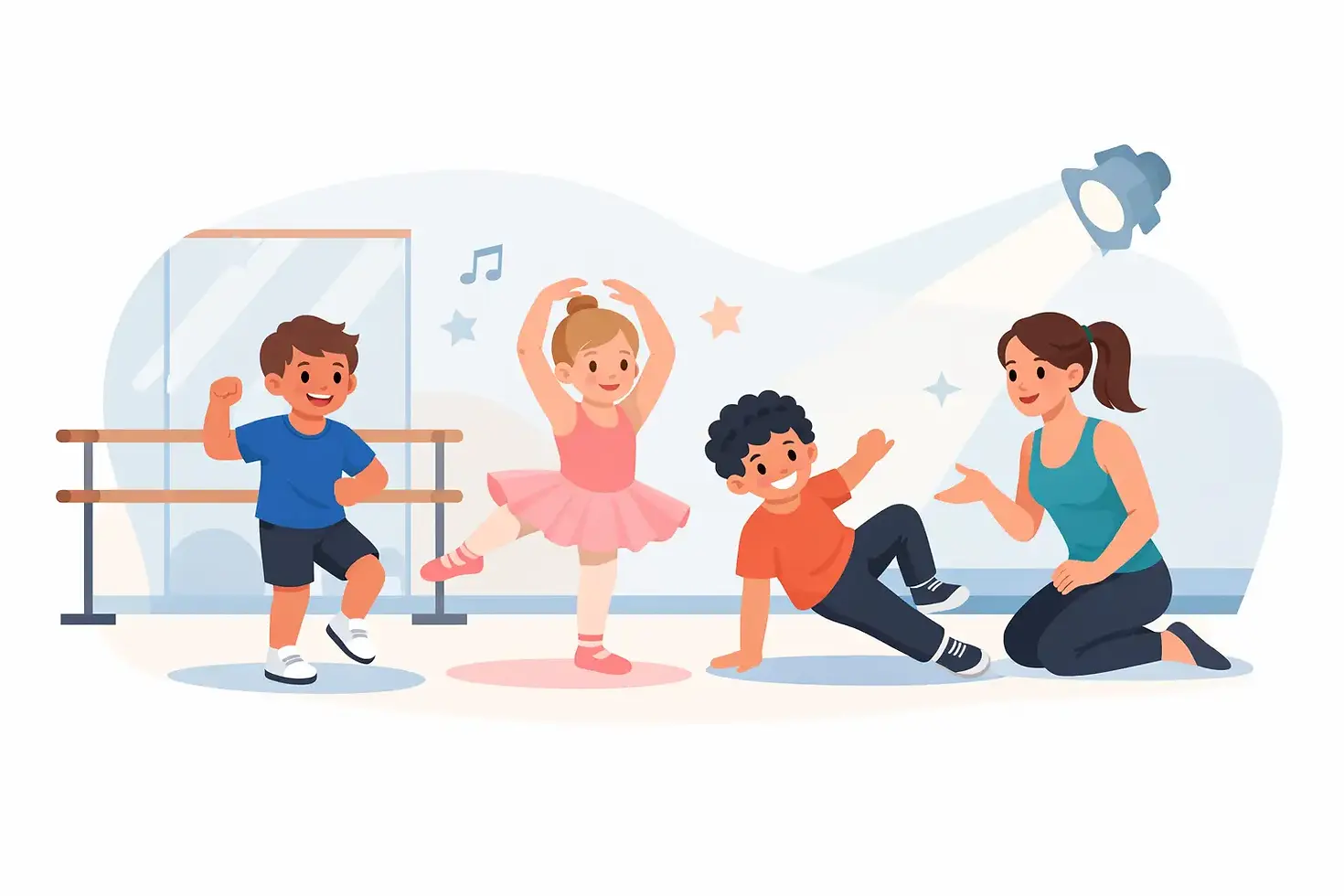
In an early childhood dance setting, that often means a class with a clear beginning, middle, and end. There may be a greeting circle, musical warm-ups, simple traveling exercises, creative movement, and short moments that introduce balance, posture, rhythm, or coordination. The goal is not to test your child. The goal is to help them experience dance in a way that feels joyful and manageable.
You should also notice how the teacher responds to different temperaments. Some children jump right in. Some need extra reassurance. Some are wiggly, distracted, or cautious. An experienced children’s dance teacher knows how to welcome each child without shaming, rushing, or comparing them.
What parents should look for during a trial class
The obvious question is whether your child had fun, but that is only one part of the picture. A class can be cheerful and still lack structure. It can also be more organized and still not be the right fit for your child’s age or learning style.
Start by watching the teaching approach. Is the instructor speaking to children in a warm, respectful way? Are directions clear and simple? Is there enough imagination and variety to keep young children engaged? In beginner ballet and foundational dance classes, good teaching often looks playful on the surface, but there is intention underneath it.
Notice the class size too. Younger children usually benefit from smaller groups where instructors can offer more individual attention. In a crowded room, it is harder for a shy child to settle in and harder for a teacher to notice who needs support.
The studio environment matters as well. Parents often pick up on this quickly. Does the space feel clean, calm, and child-friendly? Are expectations communicated clearly? Is there a sense that families are welcomed, not treated as an interruption? Those details shape trust.
How trial lessons help with the right class match
Not every child should be placed into the same program just because they are a certain age. Age is important, but readiness, personality, and previous experience matter too. That is one of the practical strengths of dance classes with trial lessons.
A trial gives the studio a chance to assess where your child may feel most comfortable. A toddler who is brand new to group activities may need a softer introduction than a confident four-year-old who already loves movement classes. An older child who wants more energy and variety may be happier in modern jazz or a broader technique-based class than in a very traditional beginner ballet setting.
This is where personalized guidance becomes valuable. Parents often come in asking, "Which class should my child join?" The honest answer is sometimes, "It depends." A trial lesson gives everyone better information so the recommendation is based on your child, not just a schedule chart.
Ballet, jazz, or foundational dance - what should beginners try?
For very young children, ballet is often a beautiful starting point because it builds posture, balance, musicality, coordination, and classroom discipline in a gradual way. It also introduces children to movement vocabulary and listening skills that support later dance training.
That said, ballet is not the only path. Some children connect more easily with a class that includes broader creative movement or modern jazz elements. These classes can feel especially inviting for energetic children who enjoy expressive movement and musical variety.
The best beginner program is usually the one that matches both developmental needs and emotional readiness. A child who feels secure and successful is far more likely to keep going, and consistency matters more than choosing the "perfect" style on day one.
Signs your child is ready after the trial lesson
Parents sometimes expect a dramatic yes or no after one class, but the answer can be more subtle. Readiness does not always look like instant confidence. Some children love the class immediately. Others leave quiet, then ask to come back the next week. Both reactions can be positive.
A few encouraging signs are simple. Your child talks about the music, the teacher, or a favorite activity. They imitate movements at home. They seem curious rather than resistant. Even if they were shy during the lesson, interest afterward often tells you a lot.
It is also helpful to consider your own comfort level. Did you feel that the teacher understood young children? Did the program seem thoughtful and age-appropriate? Did the studio make the process feel clear and supportive? Enrollment is easier when both parent and child feel reassured.
When a trial lesson does not go perfectly
Not every trial class goes smoothly, and that does not automatically mean dance is not for your child. A poor nap, separation anxiety, sensory overwhelm, or simply a new setting can affect how a first class unfolds.
The better question is why the class felt difficult. If your child was nervous but the teacher handled it gently and the structure still seemed right, a second visit may tell a different story. If the environment felt too advanced, too crowded, or not very warm, the issue may be the fit rather than your child’s readiness.
Parents often need permission to take a balanced view here. One hard first class is not failure. At the same time, not every program suits every child. A thoughtful studio will help you assess that honestly instead of pushing for a rushed decision.
Why the first dance experience matters
A child’s introduction to dance can shape more than their interest in one activity. It can influence how they feel about trying new things, participating in group learning, and expressing themselves physically and creatively.
When that introduction is handled with care, children begin building more than technique. They practice listening, taking turns, following patterns, and moving with confidence. They learn that discipline can feel positive and that progress comes step by step. For many families, those early lessons are just as valuable as the dancing itself.
This is one reason many parents in Petaling Jaya and Bandar Utama look for studios that offer trial classes and strong early childhood teaching, not just a timetable of programs. The first experience should feel like an invitation, not a test.
At C Dance Academy, that early-start approach matters because young children need more than a standard class. They need teachers who understand how to guide beginners with patience, imagination, and real developmental awareness.
If you are considering dance for your child, a trial lesson is often the most reassuring place to begin. It gives your child room to explore, and it gives you the confidence to choose a class that feels truly right. Sometimes the best next step is simply one gentle first class in the right environment.


Comments