


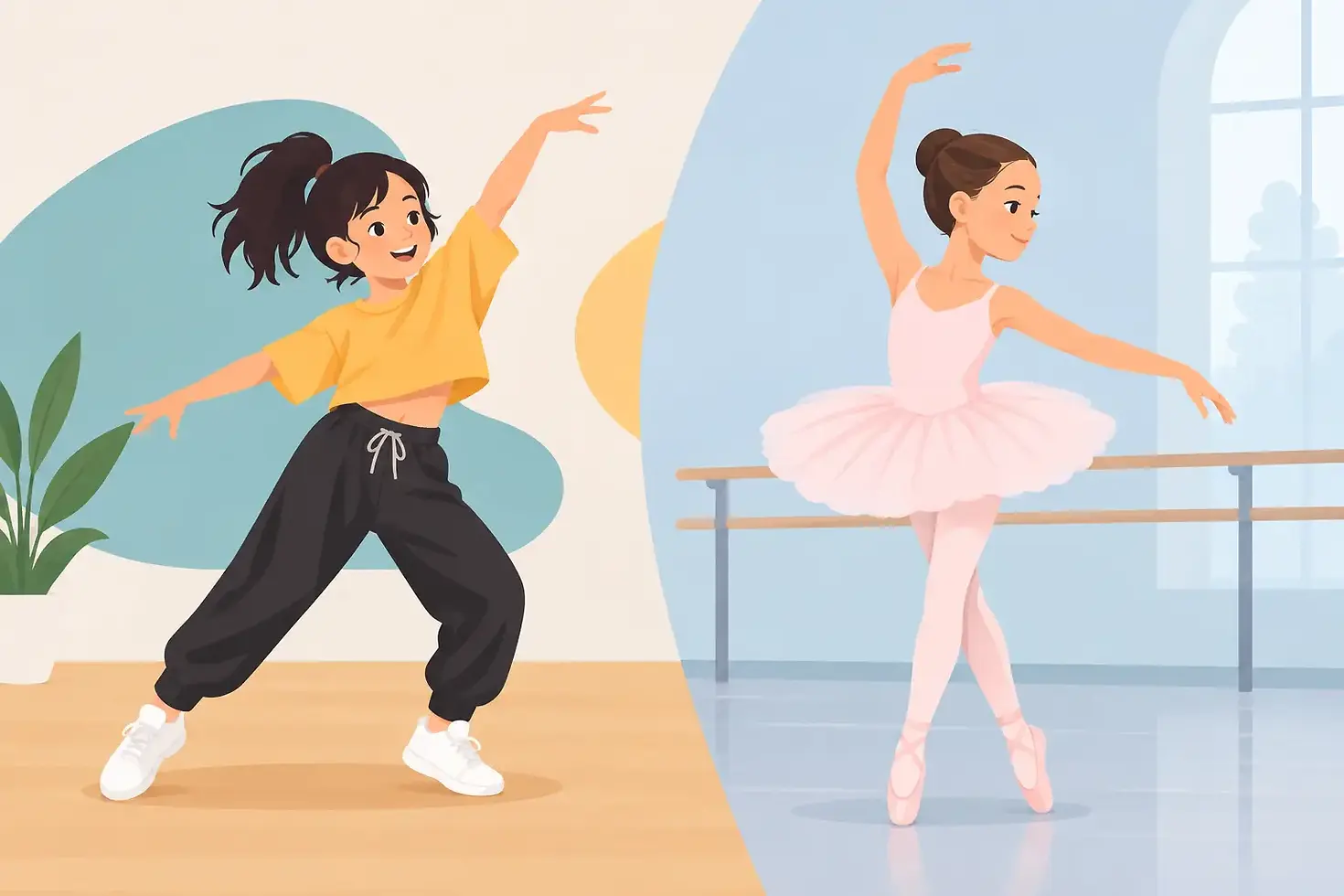
Creative Dance Versus Formal Ballet for Kids

A toddler pretending to float like a cloud, stomp like a dinosaur, then balance on one foot is not simply playing around. She is learning how her body moves, how to listen, and how to express an idea with confidence. For parents considering creative dance versus formal ballet, the best choice is rarely about which style is better. It is about finding the right starting point for your child’s age, personality, and stage of development.
Both approaches can offer meaningful benefits. The key is understanding what happens in class, what your child is ready for, and how thoughtful teaching can make dance feel both joyful and purposeful.
What Is Creative Dance?
Creative dance introduces movement through imagination, music, and simple guided exploration. A teacher may ask children to move high and low, fast and slow, make shapes with their bodies, or travel through the room like different animals, weather, or storybook characters.
For young children, these activities build foundational skills without expecting them to memorize formal vocabulary or hold precise positions for long periods. They practice balance when they freeze, coordination when they skip or jump, and body awareness when they stretch tall or curl small. Just as importantly, they learn that their ideas have value.
Creative dance is not an unstructured free-for-all. In a well-planned class, the teacher provides clear boundaries, age-appropriate instructions, and routines children can follow. The creative element gives children room to respond in their own way within a safe, guided setting.
This approach can be especially helpful for toddlers and preschoolers who are still developing attention span, language skills, and confidence away from home. A shy child may feel more comfortable becoming a butterfly than being asked to perform a perfect step in front of the class. An energetic child can learn to channel enthusiasm into purposeful movement and listening.
What Does Formal Ballet Teach?
Formal ballet is built around a recognized technique. Children learn positions, posture, alignment, musical timing, and a specific vocabulary of steps. Class often follows a clearer sequence: warm-up, barre or center exercises, traveling steps, and combinations that ask students to remember and repeat movement patterns.
Ballet develops strength, flexibility, coordination, discipline, and attention to detail. It gives children a valuable technical base that can support many other dance styles, including jazz, contemporary, and musical theater. As children grow, the satisfaction of seeing a once-difficult step become more controlled can be a powerful confidence builder.
However, formal ballet should always be taught in a way that respects a child’s physical and emotional readiness. Young beginners do not need adult-level expectations, long corrections, or pressure to achieve a polished look immediately. They need patient instruction, encouraging feedback, and movement goals that make sense for their developing bodies.
A strong early ballet program adapts ballet principles for children rather than treating young children like miniature professionals. It may use songs, stories, props, and imaginative themes while still introducing basic positions, posture, rhythm, and classroom etiquette.
Creative Dance Versus Formal Ballet: The Real Difference
The biggest difference is usually the starting point. Creative dance begins with exploration: How can my body move? What does this music make me feel? Can I show a story through motion? Formal ballet begins with technique: Where do my feet go? How do I hold my arms? How can I move with control and musicality?
Neither question is more valuable than the other. Children need both self-expression and structure. The balance simply changes as they mature.
Creative dance often gives very young children an accessible first experience because it meets them in a world they already understand: play, imagination, rhythm, and discovery. Formal ballet becomes increasingly rewarding when a child can listen to multi-step instructions, practice patiently, and enjoy working toward more specific movement goals.
It is also worth remembering that the labels can overlap. A caring preschool ballet class may include imaginative movement to keep learning engaging. A quality creative dance class may teach children how to take turns, follow directions, use space safely, and move to a steady beat. The best classes do not force parents to choose between creativity and discipline.
Which Style Is Best for Your Child’s Age?
For children around ages 2.5 to 4, a creative and ballet-inspired approach is often the most natural fit. At this age, children are building basic motor skills and learning how to participate in a group. They benefit from short activities, repeated routines, and plenty of encouragement.
A class might introduce a simple ballet position, then use a game to help children remember it. Children can practice pointed toes while pretending to wake up their feet or learn graceful arms while reaching for imaginary stars. The technique is present, but it is delivered in a language young children understand.
From about ages 5 to 7, many children are ready for more recognizable ballet structure. They can begin to focus for longer, remember combinations, understand corrections, and take pride in practicing a skill. They may still enjoy creative activities, but formal technique can take a larger role in the lesson.
Older beginners can also start ballet successfully. The right class should meet them where they are, without making them feel behind. A child who begins later may progress quickly when instruction is supportive and the class environment feels welcoming.
Look Beyond the Class Name
A class title alone cannot tell you whether it is the right fit. Two programs called creative dance can feel very different, just as two beginning ballet classes can have very different expectations. Parents should look at how the teacher works with children and whether the curriculum has been designed for the students’ age group.
In a thoughtful early childhood class, you should see children being guided with warmth and consistency. The instructor should give simple demonstrations, use positive language, and help children learn safe movement habits. Small class sizes can make a real difference, especially for young beginners who need individual reassurance and gentle redirection.
Ask whether the program includes a trial class. Watching how your child responds can be more useful than trying to predict their preference at home. Some children walk into a studio ready to copy every step. Others need a few minutes to observe, hold a parent’s hand, or warm up to the group. A patient instructor recognizes that adjustment is part of learning.
Signs Your Child May Enjoy Creative Dance First
Creative dance may be a wonderful first step if your child loves make-believe, responds strongly to music, or is still learning to follow group routines. It can also suit children who feel hesitant in new environments, because movement games provide a gentle way to participate without the pressure of getting every detail right.
That does not mean a creative child will not enjoy ballet. In fact, many children who begin with imaginative movement grow into enthusiastic ballet students because they have already developed a positive relationship with dance. They associate the studio with encouragement, friendship, and the pleasure of trying something new.
Signs Your Child May Be Ready for More Formal Ballet
Your child may be ready for a more structured ballet class if they enjoy repeating movements until they improve, naturally notice details, or ask to learn the names of steps. They may also be ready if they can participate in a class routine, listen to a teacher, and stay engaged through a series of short exercises.
Readiness is not about being perfectly still or naturally flexible. It is about curiosity, comfort, and the ability to grow with guidance. A child can be lively, silly, and full of personality while still learning the focus ballet requires.
A Balanced Beginning Builds More Than Dance Skills
The early years of dance should not rush children into performance pressure or overly technical training. They should help children feel capable in their own bodies. When creativity and age-appropriate structure work together, children learn to take turns, try again after a mistake, move with care around others, and celebrate progress.
At C Dance Academy, early childhood dance is approached with this balance in mind: joyful movement experiences supported by thoughtful foundations. Children can develop coordination and confidence while beginning to understand the focus and discipline that dance can teach over time.
If you are choosing a first class, let your child’s response guide you. The right studio should leave them feeling proud, safe, and excited to return - whether they spent the lesson twirling like a rainstorm, practicing their first ballet position, or doing a little of both.


Comments