


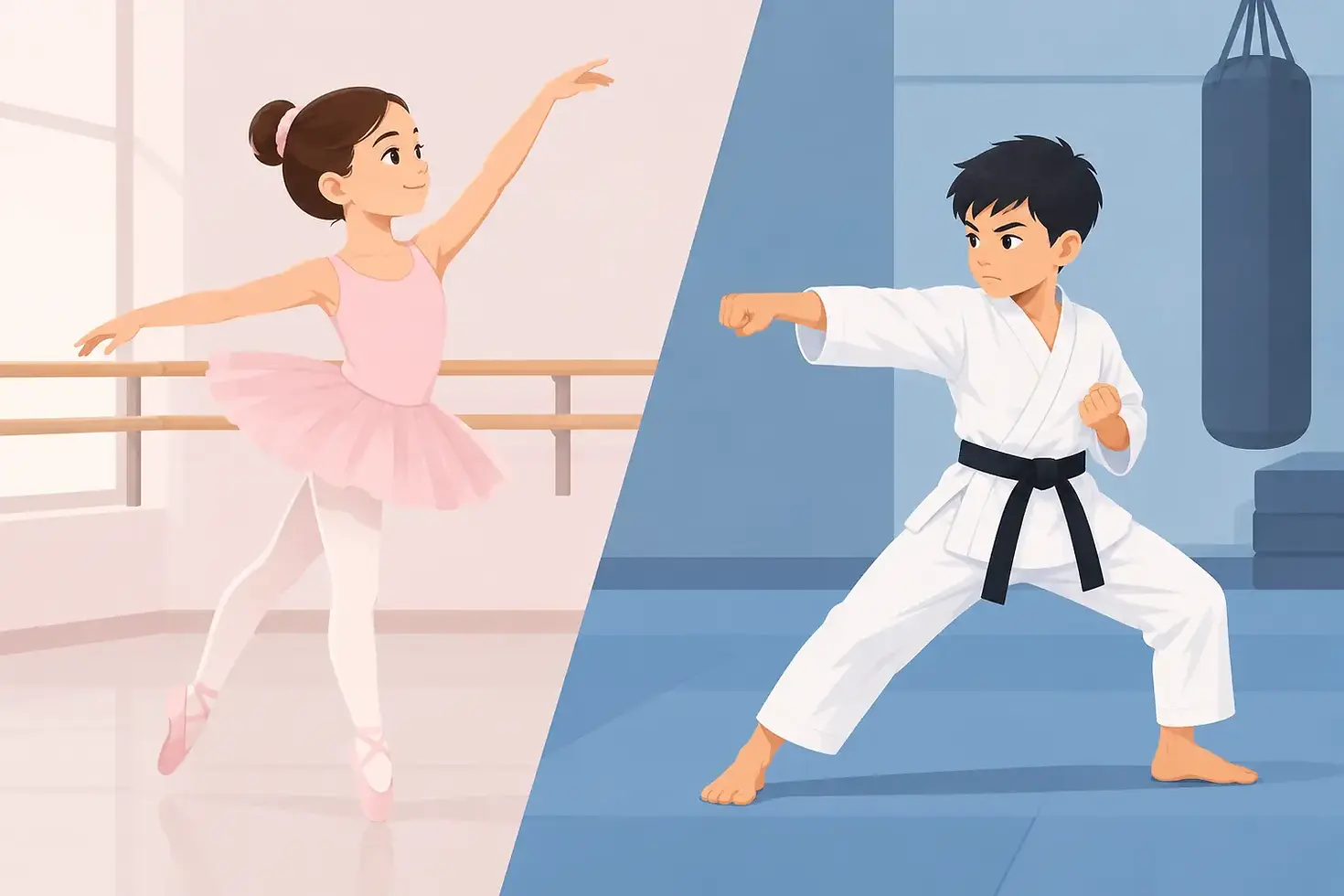
Ballet Versus Martial Arts Kids: Which Is Best?

A child who spends the morning twirling in the living room may still be fascinated by a martial arts uniform. When parents compare ballet versus martial arts kids classes, the question is rarely about which activity is “better.” It is about finding a place where their child feels capable, safe, motivated, and excited to return each week.
Both activities can offer meaningful physical and personal benefits. Ballet develops musicality, posture, flexibility, and expressive movement. Martial arts often emphasize focus, self-control, respect, and purposeful technique. The best choice depends on your child’s age, temperament, interests, and the quality of instruction they receive.
Ballet Versus Martial Arts for Kids: The Core Difference
Ballet and martial arts both ask children to listen carefully, follow a sequence, and practice skills over time. They can both strengthen coordination, balance, body awareness, and confidence. Yet the experience of learning is quite different.
In a beginner ballet class, children learn how movement can tell a story. They explore rhythm, shapes, graceful arms, pointed toes, and traveling steps. For young children especially, ballet is often taught through imagination: becoming butterflies, moving like raindrops, or dancing to a favorite piece of music. The structure is real, but it is presented in a playful, age-appropriate way.
Martial arts classes tend to focus more directly on techniques, stances, patterns, and respectful routines. Children may practice blocks, kicks, forms, or partner-based drills. Many children enjoy the clear goals of earning belts or progressing through levels. For a child who loves rules, measurable milestones, and energetic movement, that structure can feel very rewarding.
Neither path should feel overly serious for a preschooler. At the earliest ages, a wonderful class makes room for movement, imagination, encouragement, and repetition. Children are still learning how to wait for a turn, copy an instructor, and feel comfortable participating away from a parent.
What Ballet Gives Young Children
Ballet is an especially strong foundation for children who are drawn to music, movement, and creative expression. It teaches children to control their bodies with care rather than simply move quickly. That control supports skills they can carry into other activities, from sports to school performances.
Coordination, balance, and body awareness
A young dancer learns where their feet are, how to stand tall, how to move through space without bumping into others, and how to coordinate arms and legs at the same time. These may sound like small skills, but they are important building blocks for physical confidence.
Ballet also encourages alignment and balance in a gentle, guided setting. A qualified instructor adapts expectations to the child’s developmental stage. Toddlers do not need perfect technique. They need patient guidance, simple movement patterns, and many chances to succeed.
Confidence through expression
Some children find it easier to show their personality through movement before they are ready to speak up in a group. Ballet gives them a positive outlet for that expression. A shy child may begin by copying quietly from the back of the room, then gradually feel proud enough to dance closer to the front or participate in a performance.
There is also a special confidence that comes from practice. When a child remembers a sequence, keeps time with music, or shows a parent a new step at home, they see that effort leads to growth. That lesson reaches well beyond the studio.
A gentle introduction to discipline
Ballet has structure: children learn to listen, take turns, follow directions, and finish an activity before moving on. But for very young students, discipline should be nurturing rather than intimidating. The goal is to help a child build focus while preserving their joy in movement.
At C Dance Academy, early childhood ballet is designed around this balance. Small classes and instructors experienced with young children can make a first class feel less overwhelming, while still giving every child a meaningful introduction to dance.
What Martial Arts May Give Your Child
Martial arts can be a wonderful choice for children who enjoy high-energy activity and clear routines. It often gives children a strong sense of progress, especially when they work toward new skills or belt levels.
Many programs reinforce respect, self-control, and persistence. Children may learn to stand still when asked, respond to instructions, and practice a technique several times without giving up. For a child who benefits from predictable expectations, this can be very supportive.
Martial arts also introduces the idea that strength includes control. In a well-run class, children learn that physical skills come with responsibility. They are taught to use their bodies safely and respectfully, not to act aggressively.
Still, not every child enjoys the same kind of energy or instruction. Some children are energized by drills and direct correction. Others respond more warmly to music, storytelling, and a creative group atmosphere. A trial class can reveal much more than a brochure ever could.
How to Choose Between Ballet and Martial Arts
Start by watching what your child naturally does during play. Do they make up dances when music comes on, notice costumes, and enjoy pretending? Ballet may be a lovely fit. Do they like obstacle courses, superhero poses, clear challenges, and practicing a skill until they get it right? Martial arts may appeal to them.
Age matters too. Children as young as 2.5 or 3 are still developing attention, coordination, and comfort in group settings. At this stage, the instructor’s approach often matters more than the label on the class. Look for a program built specifically for young children, rather than one that expects preschoolers to learn like older students.
Consider your family’s practical needs as well. A class that fits your schedule and is close enough to attend consistently gives your child the best chance to settle in and grow. For families in Bandar Utama, Damansara, and Petaling Jaya, choosing a local program can make weekly routines feel calmer and more sustainable.
Questions to Ask Before Enrolling
Before choosing either activity, ask how the class is organized for your child’s age. Find out about class size, instructor experience, safety practices, and how teachers support a child who feels shy or needs extra time to adjust.
It is also helpful to ask what a typical lesson looks like. Is there a warm-up? How are children encouraged to participate? How do instructors handle conflict, frustration, or a child who has trouble separating from a parent? The answers will tell you whether the environment is truly child-centered.
Pay attention to the feeling in the room during a trial class. A good program has clear boundaries, but it should also feel kind. Children should be corrected with patience and praised for genuine effort. They do not need to be the strongest, fastest, or most flexible child in the room to belong there.
It Does Not Have to Be One or the Other
For some families, the choice is not permanent. A child may begin with ballet to build coordination and confidence, then try martial arts later. Another child may enjoy martial arts during one season and return to dance when they are ready for more creative expression.
Older children may even enjoy both, provided their schedule leaves enough time for rest, schoolwork, family, and unstructured play. Activities should enrich childhood, not turn every afternoon into a race from one commitment to the next.
The most helpful choice is the one that allows your child to feel successful while learning something new. Offer them a welcoming first experience, notice what makes their face light up, and give their interests room to grow.


Comments