


10 Best After School Dance Activities for Kids

The hours after school can set the tone for a child’s whole week. After sitting, listening, and following routines all day, many children need a positive way to move, create, and feel proud of what their bodies can do. The best after school dance activities offer more than an energetic outlet. With the right teaching and structure, they can build coordination, confidence, discipline, and a lasting enjoyment of movement.
For young children, the goal is not to rush into advanced steps or flawless performances. It is to give them a safe, joyful place to explore dance at a pace that suits their age. A well-chosen class helps a child feel seen, supported, and excited to return each week.
What Makes an After-School Dance Activity Worthwhile?
A good dance activity balances freedom with gentle structure. Children need room to imagine, wiggle, laugh, and express themselves, but they also benefit from learning how to listen, take turns, remember sequences, and work toward a shared goal.
For toddlers and preschoolers, this may look like dancing with scarves, moving like animals, practicing simple ballet positions, and learning to follow the beat. For early elementary-age children, it can grow into more focused ballet foundations, jazz combinations, flexibility work, and stage confidence.
The best fit depends on your child’s personality. A child who is shy may thrive in a small, encouraging class where progress is celebrated quietly. A child with lots of energy may enjoy upbeat movement and clear routines. Some children fall in love with the elegance of ballet, while others respond to modern jazz and its lively musicality. There is no single “right” style - only a supportive starting point.
10 Best After School Dance Activities for Kids
1. Creative Movement for Toddlers
Creative movement is often the ideal first step for children around ages 2.5 to 4. Lessons use stories, music, props, and simple movement games to introduce body awareness. Children may stretch tall like a tree, tiptoe like a mouse, or float like a butterfly.
This approach feels like play, but it develops important early skills. Young dancers practice balance, spatial awareness, rhythm, and the ability to follow simple directions. It also helps them become comfortable being part of a class without placing too much pressure on technique.
2. Pre-Ballet Classes
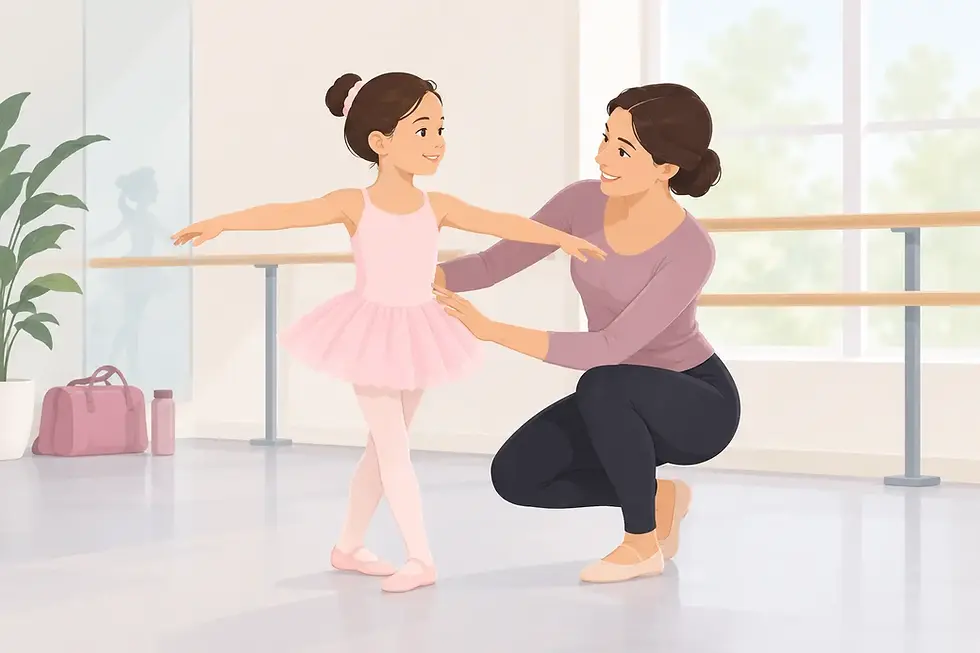
Pre-ballet introduces the grace and structure of ballet in an age-appropriate way. Children begin learning posture, basic arm positions, pointed toes, gentle jumps, and musical timing through imaginative activities that keep lessons engaging.
Ballet is especially valuable for building a strong foundation. It supports balance, coordination, flexibility, and control while encouraging children to move with care and intention. For many families, pre-ballet becomes a meaningful weekly routine that grows alongside their child.
3. Beginner Ballet Technique
As children become more ready for focused instruction, beginner ballet classes offer a natural next step. They learn basic vocabulary and simple combinations while developing strength, alignment, and awareness of how their bodies move.
A beginner class should still feel welcoming. Children do not need prior experience or perfect flexibility to start. What matters most is patient instruction, correct guidance, and a class environment where every child can learn without comparing themselves to others.
4. Modern Jazz Dance
Modern jazz gives children a chance to move with energy, personality, and rhythm. Classes commonly include warm-ups, stretches, traveling steps, turns, jumps, and short combinations set to age-appropriate music.
This style can be a wonderful option for children who enjoy expressive movement and a faster pace. It also complements ballet training by encouraging coordination, musicality, and confidence. A child who initially feels hesitant about formal dance may find jazz an inviting way to participate.
5. Rhythm and Musical Movement Games
Not every after-school activity has to be a full dance class to be useful. Rhythm games can help children connect movement to music through clapping patterns, marching, freeze dances, and call-and-response activities.
These games strengthen listening skills and timing, especially for younger children. They are also a gentle way to help a child who is still deciding whether a structured dance class feels right for them. When taught in a group, rhythm activities encourage cooperation and joyful participation.
6. Dance Storytelling
Dance storytelling combines imagination and movement. A teacher may guide children through a story about a trip to the jungle, a magical garden, or a journey through the clouds, inviting them to use their bodies to become part of the scene.
For preschoolers, this kind of activity supports language development, creativity, and emotional expression. It gives children who may not yet have the words to explain a feeling another way to communicate. It also teaches that dance is not only about steps - it is a form of storytelling.
7. Stretching and Flexibility Play
Gentle stretching is an important part of healthy dance training, but it should always be carefully guided. For children, flexibility activities should focus on safe habits rather than pushing for dramatic results. Reaching, lengthening, bending, and relaxing into simple stretches can help young dancers understand their bodies.
The benefit is not simply becoming more flexible. Children learn patience, body control, and the value of warming up before active movement. An experienced instructor knows how to keep stretching positive and never force a child beyond what feels safe.
8. Balance and Coordination Challenges
Simple challenges such as walking on a line, standing on one foot, hopping through markers, or practicing controlled turns can feel exciting to children. These activities build the coordination needed for dance while supporting everyday movement skills.
Balance work is particularly helpful during the early years, when children are still gaining confidence in how their bodies move through space. A child who practices balance in a friendly, low-pressure setting often carries that confidence into playground games, sports, and daily routines.
9. Mini Dance Performances
A small in-class performance or end-of-term presentation can give children a meaningful goal to work toward. It does not need to be elaborate. Even a short routine performed for parents helps young dancers experience the pride of practicing, remembering, and sharing something they have learned.
Performances also teach children about teamwork. They learn that everyone has a place in the group and that showing up for rehearsals matters. For some children, the spotlight builds confidence. For others, simply standing with classmates and trying their best is a major achievement.
10. Family Dance Practice at Home
A few minutes of dancing together at home can extend the joy of class without turning the living room into another lesson. Let your child show you a favorite move, choose a song, or create a short dance of their own.
Family dance time reinforces that movement is something to enjoy, not something to get perfect. It can also help parents see the progress that happens gradually: improved rhythm, clearer posture, stronger listening, or a child who now walks into class with a smile.
How to Choose the Best After School Dance Activities
When choosing among the best after school dance activities, look beyond the class description. The teacher’s approach matters just as much as the style of dance. Young children need instructors who understand child development, communicate with warmth, and know how to maintain structure without making class feel intimidating.
Small class sizes can make a real difference, particularly for beginners. Children receive more individual attention, and teachers can adjust support when a child is nervous, energetic, or still learning to follow group routines. A welcoming studio should also be open to helping parents find the most suitable class rather than pushing every child into the same program.
Consider practical details too. A class scheduled at a manageable time, close to home, is more likely to become a calm family routine than a weekly rush. For families in Petaling Jaya, Damansara, and Bandar Utama, choosing a local studio can make space for consistency while keeping travel time reasonable.
A trial class is often the best way to decide. Watch how your child responds to the teacher, the music, and the group. It is normal for some children to take a few weeks to settle in, especially if this is their first independent activity. The right environment gives them time, encouragement, and a reason to keep trying.
A Gentle Start Can Lead to Lasting Confidence
Dance does not have to begin with a big commitment or a child who already knows they love performing. It can begin with one class, one favorite song, or the quiet pride of learning to balance on one foot. At C Dance Academy, age-appropriate ballet and dance classes are designed to help young children grow through movement in a caring, structured setting.
The most rewarding after-school activity is one your child looks forward to - a place where they can move freely, learn patiently, and discover that confidence can start with a single step.


Comments