


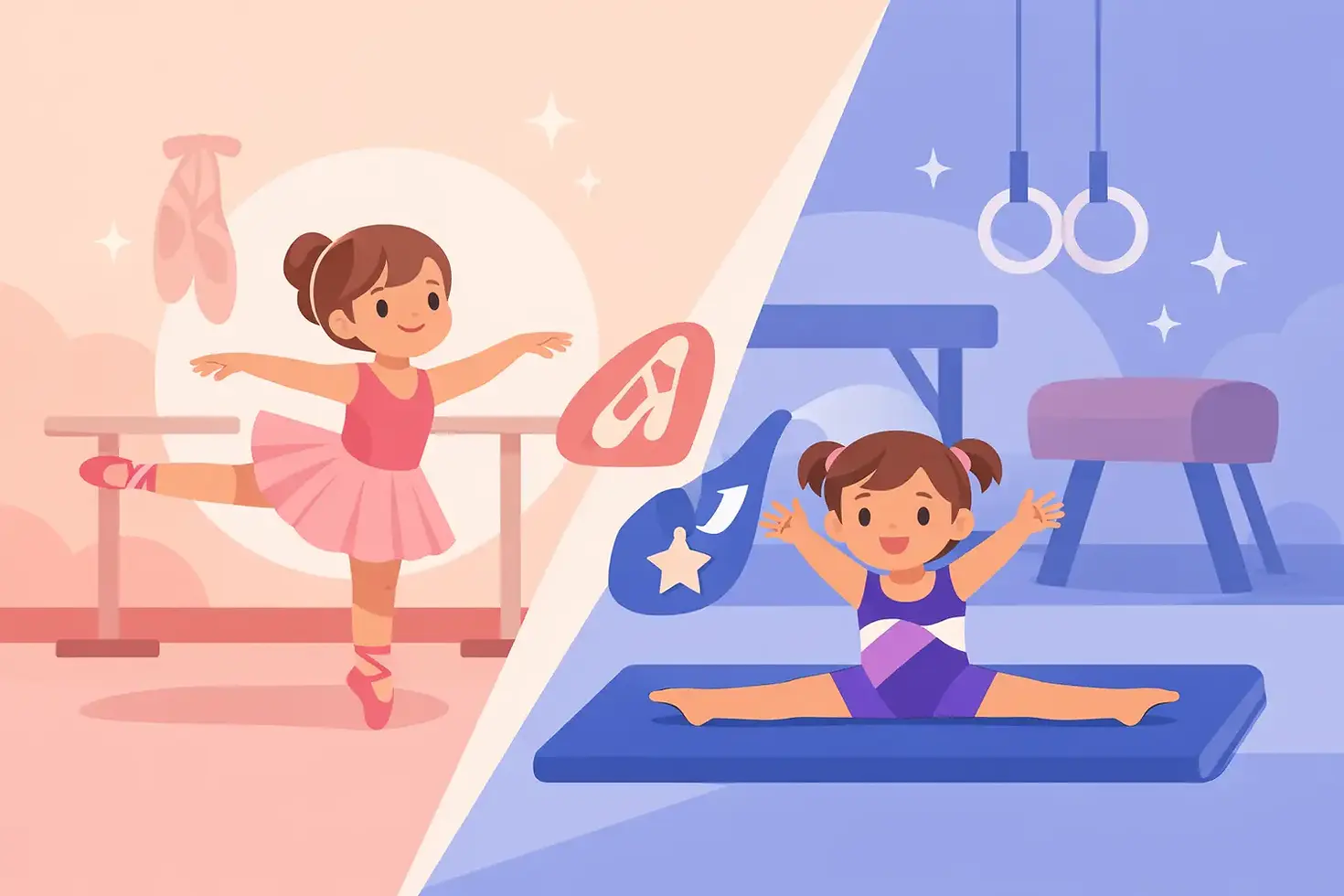
Ballet vs Gymnastics for Toddlers: What Fits Best?
- infocdanceacademy
- Aug 3
- 6 min read

A toddler who spends the morning turning the sofa cushions into a stage may thrive in ballet. Another who cannot resist climbing, rolling, and hanging from the playground bars may light up in gymnastics. When parents compare ballet vs gymnastics for toddlers, the best choice is rarely about which activity is better. It is about which setting helps your child feel secure, engaged, and proud of what their body can do.
Both activities can support healthy movement, confidence, listening skills, and social development. The difference lies in how children move, what they practice, and the kind of class experience that suits their personality at this early age.
Ballet vs Gymnastics for Toddlers: The Real Difference
Toddler ballet introduces movement through music, imagination, rhythm, and simple dance foundations. A well-designed class may include marching, skipping, stretching, balancing, pointing toes, moving through space, and following playful themes. Young children are not expected to perform advanced ballet steps. They are learning body awareness, coordination, posture, and the joy of expressing themselves through movement.
Toddler gymnastics generally focuses on broader physical challenges. Children may practice rolling, jumping, climbing, balancing on low equipment, hanging, crawling, and landing safely. Classes often use mats, beams, bars, and obstacle-style activities that encourage gross motor development and confidence with movement.
Neither approach is automatically more demanding or more beneficial. A thoughtful toddler program in either discipline should be age-appropriate, carefully supervised, and designed around short attention spans. The quality of instruction matters just as much as the activity itself.
What toddler ballet can nurture
Ballet gives toddlers a gentle structure for learning how to move with intention. They begin to notice whether they are standing tall, listening for a beat, using one foot at a time, or making shapes with their arms. These small skills build coordination, balance, and spatial awareness without making class feel overly formal.
For many children, music is the key. A child who is hesitant about climbing or tumbling may happily join a dance game, copy a teacher's movement, or travel across the room as a butterfly, a train, or a tiny ballerina. This imaginative approach makes it easier for toddlers to participate before they have the vocabulary or confidence to explain how they feel.
Ballet can also support habits that carry into preschool and beyond. Children practice waiting for a turn, responding to simple instructions, remembering a sequence, and being part of a group. These are gentle first lessons in focus and discipline, delivered through a joyful experience rather than pressure.
What toddler gymnastics can nurture
Gymnastics often appeals to children who love a physical challenge. It gives energetic toddlers a place to crawl, jump, swing, roll, and test their balance in a structured environment. Those activities can strengthen large muscle groups and help children understand how to move safely through different levels and surfaces.
A child who is naturally adventurous may enjoy the clear, active goals in gymnastics: climb up, step across, jump down, then try again. Repetition can be especially satisfying when they feel themselves becoming more capable each week.
At the same time, parents should look closely at the class setup. Toddlers need low, suitable equipment; attentive instructors; and realistic expectations. A class should not rush children into skills they are not ready to attempt. Confidence grows best when a child feels supported, not pushed.
Consider Your Child's Temperament First
Your child's personality can offer better guidance than a list of benefits. Watch what they choose during free play. Do they dance when music comes on, enjoy copying actions, or make up little stories? Ballet may feel like a natural extension of their interests.
Do they seek out climbing frames, love jumping off low steps, or repeatedly practice forward rolls on a soft surface? Gymnastics may give them an outlet they genuinely enjoy. Some children will be excited by both, and that is completely normal.
It is also worth considering how your toddler responds to groups. A child who is shy in new settings may appreciate the predictable rhythm of a ballet class, where familiar songs and repeated routines create comfort. A highly active child may initially prefer the faster pace and equipment changes found in gymnastics. Yet these are tendencies, not rules. A quiet child can love tumbling, and an energetic child can become deeply absorbed in dance.
The right class is one where your child can be themselves while gradually learning new skills. Tears at the first class do not always mean a poor match, either. Many toddlers need time to adjust to a new teacher, room, and routine. Look for steady signs over several sessions: increasing comfort, willingness to join in, and a sense of pride after class.
Think About the Class Experience, Not Just the Label
For toddlers, the name on the class schedule matters less than what happens during the lesson. A strong early childhood program has a clear routine, but it remains flexible enough for young children. It uses short activities, positive encouragement, and plenty of opportunities to succeed.
Ask how instructors support children who are new, nervous, or still learning to separate from a parent. Find out whether classes are grouped by a suitable age range and whether the teacher has specific experience with toddlers. Small class sizes can make a meaningful difference because young children often need individual reminders, reassurance, and help taking turns.
In ballet, parents may want to ask whether the class is designed specifically for preschoolers rather than adapted from an older children's syllabus. Toddlers need movement games, imagination, and simple foundations. They do not need a strict focus on perfect technique or long periods of standing still.
In gymnastics, ask how safety is built into each lesson. The answer should include active supervision, appropriate equipment, progressive activities, and instruction on safe jumping, landing, and waiting. A good program makes physical exploration feel exciting while maintaining sensible boundaries.
Which Activity Builds More Confidence?
Both can. The route to confidence simply looks different.
In ballet, confidence may appear when a child remembers a movement, dances in front of the group, or proudly shows a parent a new pose. The experience can be especially meaningful for children who enjoy creativity, music, and self-expression. Over time, performing in a supportive setting may help them become more comfortable being seen and heard.
In gymnastics, confidence may grow when a child climbs independently, balances across a low beam, or lands a jump with control. These tangible physical achievements can be powerful for children who like to test themselves and see clear progress.
What matters most is that your child is praised for effort as well as outcome. Toddlers are still developing emotional resilience. A teacher who notices brave attempts, patient waiting, and kind participation helps children associate learning with encouragement rather than fear of getting something wrong.
Can a Toddler Do Both Ballet and Gymnastics?
Yes, if your family's schedule and your child's energy allow it. Ballet and gymnastics can complement one another well. Ballet develops musicality, posture, coordination, and expressive movement, while gymnastics can build strength, agility, and confidence in larger movements.
Still, more is not always better. Toddlers need unstructured play, rest, family time, and room to simply be little. Starting with one weekly class is often enough. Once your child has settled into a routine, you can decide whether adding another activity would feel exciting or overwhelming.
There is no need to choose an activity based on what might lead to a future competitive pathway. At two, three, or four years old, the goal is much simpler: help your child develop a positive relationship with movement. A child who feels joyful and capable is more likely to stay active as they grow.
A Gentle Way to Make the Choice
A trial class can reveal more than hours of online research. Notice whether your child watches with curiosity, responds warmly to the instructor, and leaves with a smile or a story to tell. Also notice how you feel as a parent. You should see a space that is organized, welcoming, and respectful of early childhood development.
At C Dance Academy, toddler ballet classes are designed to introduce young children to dance through age-appropriate movement, music, imagination, and caring guidance. For a child who is drawn to rhythm and creative expression, a nurturing first ballet experience can become a happy weekly ritual.
Choose the class that gives your toddler a reason to move with confidence, whether that confidence begins with a tiny plié, a careful balance, or an enthusiastic jump.


Comments